Clearly and effectively exchange information, ideas, facts, and perspectives with persons inside and outside of an organization.

Key Components

  1. Develop and Communicate Ideas
    • Communication skills fall into three broad categories: writing, speaking, and listening. These skills are invaluable both personally and professionally as you practice asking specific questions, interviewing, and explaining your reasoning either in essays or emails. 

Writing Skills

Email is a crucial component of workplace conversations. Thus, it is important to be comfortable communicating via this medium.

MaestroLabs has great articles on common email etiquette that will help you with writing emails in professional settings, including sending emails to faculty, staff, supervisors, or colleagues.

Email Signature

Your email signature should include:

  • Your full name
  • Pronouns (if comfortable)
  • Your title and/or major
  • St. Catherine University (If Student); Employer (If no longer student)
  • Your email and phone number

You can find email signature ideas and templates to customize here.

Email vs. Other Virtual Communication

It is important to distinguish between email communication and “chat-style” communication such as Google Chat, Microsoft Teams, or common workplace communication apps such as Slack. Often, these forms of communication will have their own distinct norms based on the office you work in. For example, some workplaces may send emojis and GIFs, while others may use full punctuation. If you are unsure of the tone you should use in these formats, try asking a colleague or your supervisor for guidance.

Speaking Skills

While it is important to be able to speak in front of groups (ie: presentations), speaking skills encompass far more than giving a speech. This skill group includes knowing how to ask clear, concise questions, and using accessible language based on the audience. 

Listening Skills

How do you know someone is listening? Active listening shows a person you’re engaged in what they’re saying. Check out our resources for active listening and nonverbal communication below.


Transferable Skills 101: Definition, Examples, and How to Build Yours in 2026

Even if you haven’t had your first professional job, you’ve likely built transferable skills through internships, volunteering, classes, and extracurriculars. These skills can transfer from one role to another and include soft skills like collaboration and problem-solving, as well as

Read more

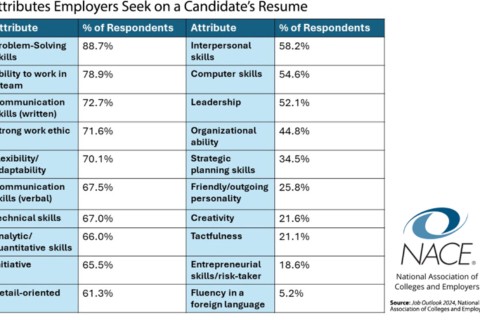
In 2024, employers most value problem solving and teamwork

There are questions that are asked every day, every week, every month, and every year. In the context of early career hiring, one of those is, “What is it that employers most want when they’re hiring students for internships or …

By College Recruiter
College Recruiter believes that every student and recent grad deserves a great career.
Read more

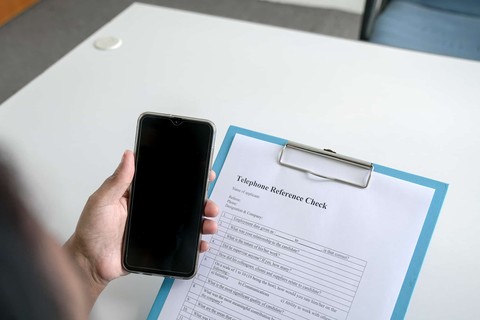
What Are Professional References?

After applying, interviewing, and waiting, you got a job offer. But the written offer notes it’s contingent on your professional references, and you have no idea who to ask or how to get started.

Whether you’re a student who’s never …

Read more

Career Resources

At St. Catherine University, we define “research” broadly. Projects that involve investigation, inquiry, creativity, discovery, originality, analysis, and interpretation are …

Check out this blog for 25 key tips to email etiquette in the workplace.

Use the ideas and templates from this Google Doc to format your own email signature!

Listening well is a critical part of building and maintaining relationships. It supports efforts to understand one another and make …

“Often the richest learning and discoveries happen when people listen to the varied and unique perspectives of co-workers, fellow students, …

Offer negotiation is a process in which you and a representative of your current or prospective company discuss the terms …

Contact & Location

Phone
651-690-8890
Address

CdC | Room 210
2004 Randolph Avenue
St. Paul, MN 55105

Career Service Hours

Monday 8:00am - 4:30 pm
Tuesday 8:00am - 4:30 pm
Wednesday 8:00am - 4:30 pm
Thursday 8:00am - 4:30 pm
Friday 8:00am - 4:30 pm

Appointments may be available from 4:00-6:00 based on staffing capacity.