Personal Statement Guide & Worksheet
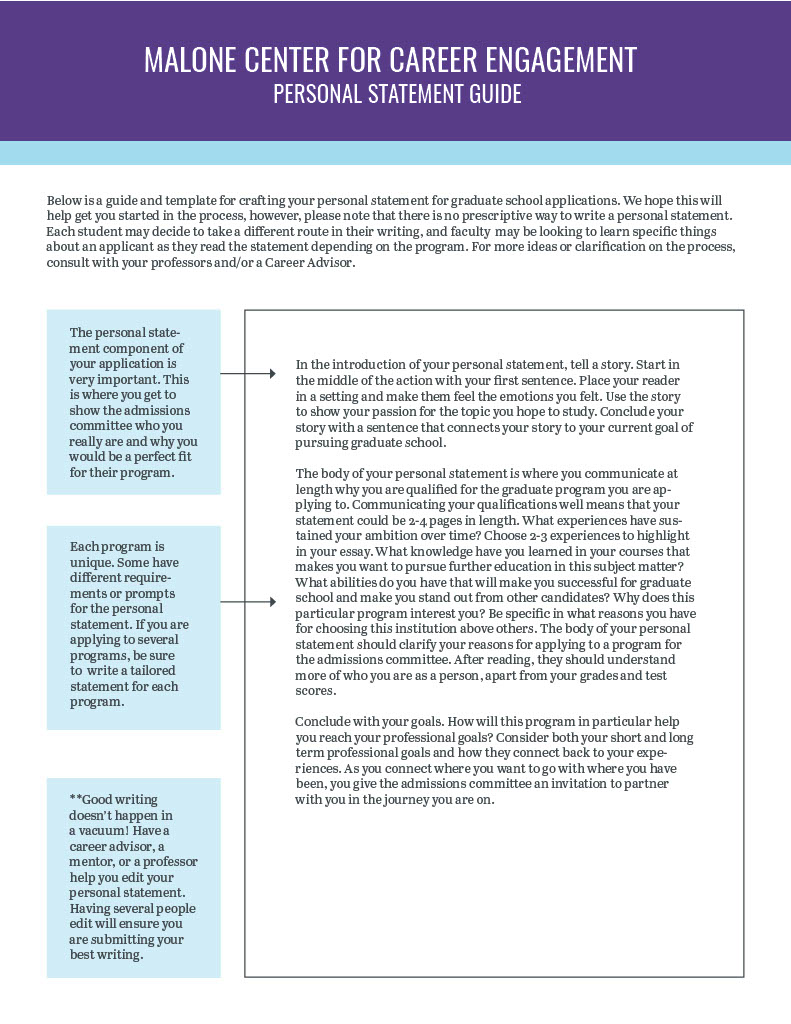
While there is no concrete “right” or “wrong” way to write a personal statement, this worksheet created by the Malone Center for Career Engagement at Furman University is a great place to get started and brainstorm what information you can include.

The Personal Statement is where you get to show the admissions team who you are as a person and why you are good fit for their program. Because each program is unique, be sure to tailor your personal statement for each school you apply to.
As you get started, break your personal statement down into manageable sections:
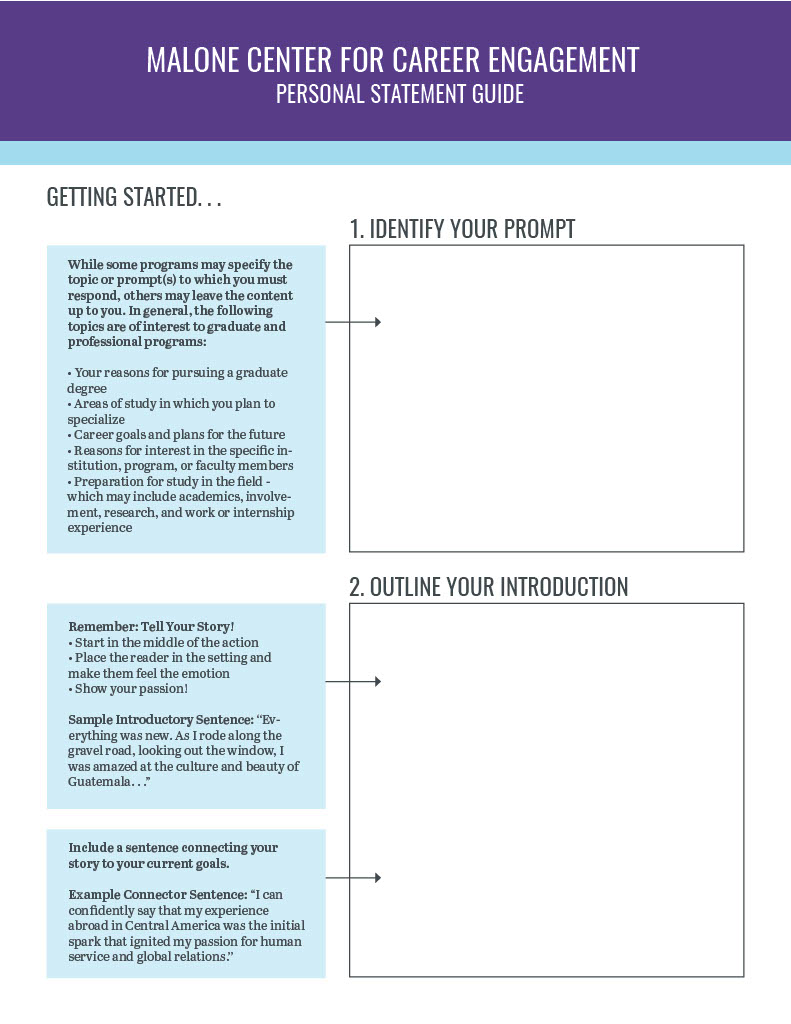
- What is the prompt?
- Outline your introduction
- Outline the body of your statement
- Outline the conclusion

First, identify the prompt. Some programs may have a specific topic to respond to while others may leave it up to. Generally, graduate and professional programs are looking for:
- Why you want to pursue a graduate degree
- Areas of study you want to specialize
- Career goals
- Why you’re interested in this particular program/school
In your introduction, tell a story. Place the reader in the middle of the action and show your enthusiasm for the topic. Use a connecting sentence to transition into the body paragraphs.

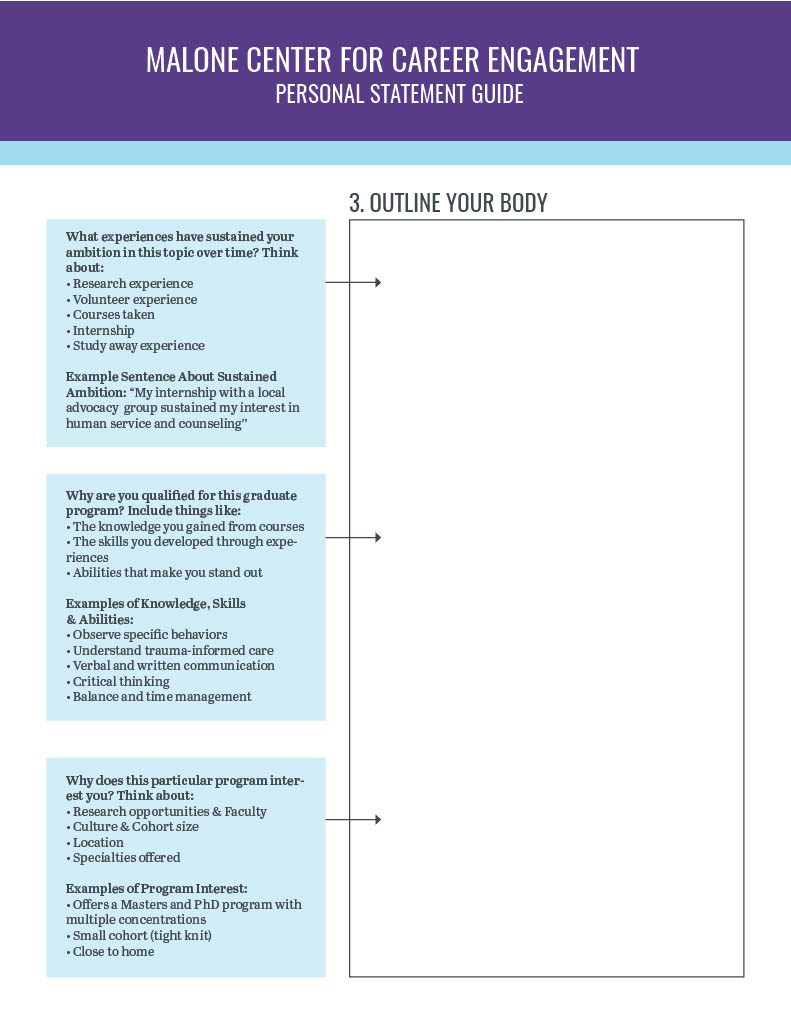
The body of your personal statement will be the longest section. It should cover three broad themes:
- Experiences that have sustained your interest over time. Ie:
- Research experience
- Volunteer experience
- Courses
- Internships
- Study abroad experiences
- Why you’re qualified for the specific program. Ie:
- Knowledge you’ve gained
- Skills you’ve developed
- Abilities that make you stand out
- Why this program interests you. Ie:
- Research opportunities and/or faculty
- Culture and cohort size
- Location
- Specialties offered

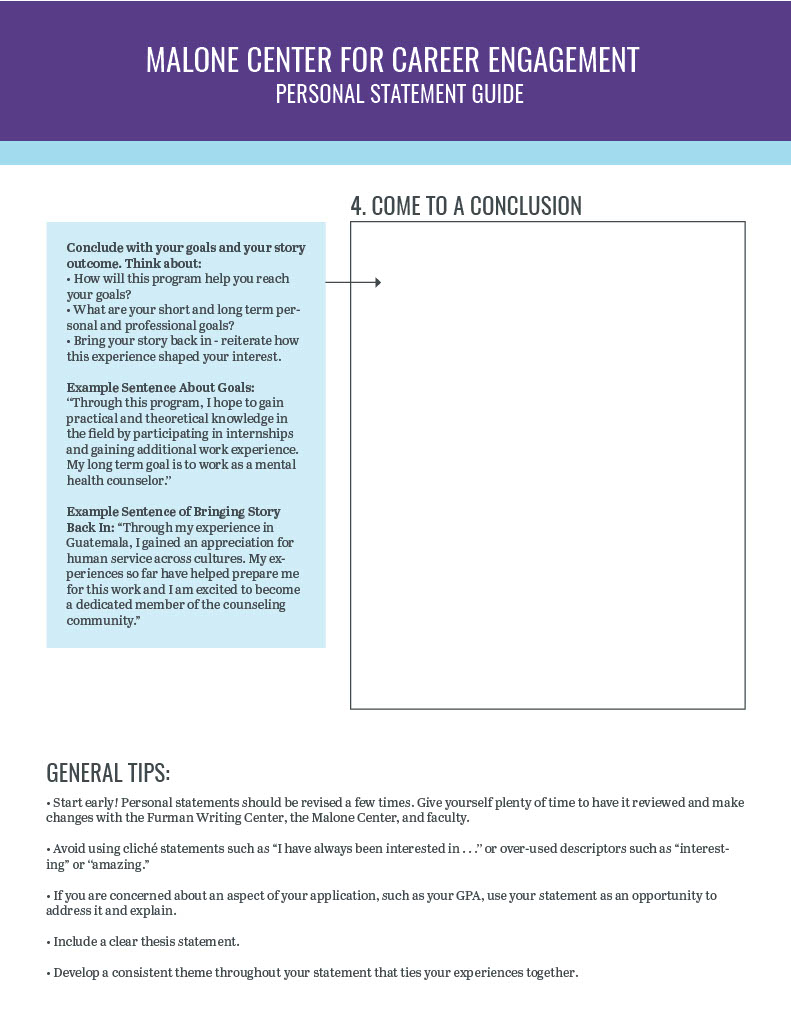
You conclusion should cover goals you have and/or return to the story you began with in your introduction. Think about the following:
- How will the program help you reach your goals?
- What are your short and long-term goals personally and professionally?
- Reiterate how the experience from your story shaped your interest.
General tips to keep in mind:
- Start early. You’ll want to revise at least once.
- Avoid cliches and over-used descriptors such as “amazing”.
- Include a clear thesis statement.